Cold Weather Will Expose Every Weak Spot on Your Truck — Fix Them Now Before Winter Does It for You
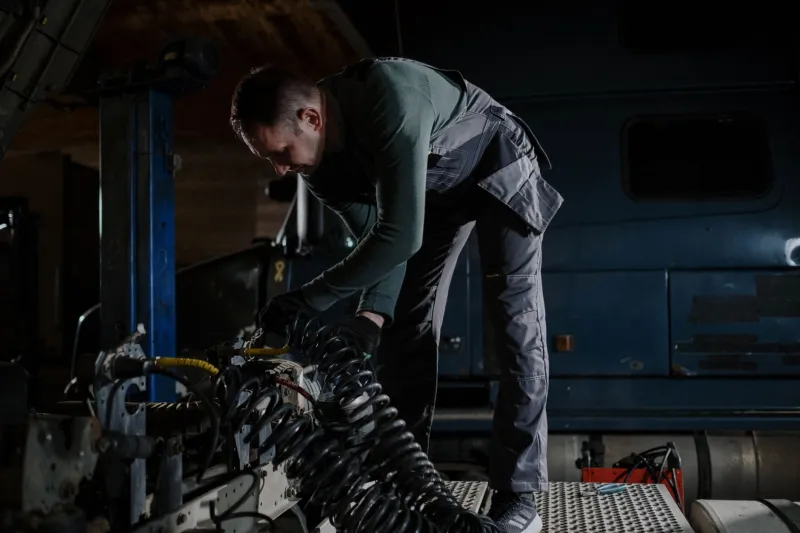
Here's something every experienced truck driver and fleet manager already knows: winter doesn't create problems. It reveals them. That marginal battery that's been borderline all summer? It'll be completely dead when it hits 10°F in January. That slow coolant leak you've been monitoring? It'll turn into a cracked block when the temperature swings 40 degrees overnight in the Midwest.
Cold weather is the great accelerator of deferred maintenance. And cold-weather breakdowns are almost always more expensive than warm-weather ones — harder to diagnose, harder to source parts for quickly, and far more disruptive to your operation.
The good news: most winter failures are entirely preventable. Here's how to get ahead of them.
Why Winter Breakdowns Hit Harder Financially
Before we get into the checklist, it's worth understanding why cold-weather repairs tend to cost more:
Remote breakdown locations are more common. Winter weather pushes routes through less-traveled areas. A breakdown on a mountain pass in Colorado or on a rural stretch of I-90 in South Dakota means longer tow distances and fewer nearby shops with heavy-duty capability.
Diagnostic time increases. Cold-related failures can be intermittent and harder to reproduce in a shop environment, which adds diagnostic labor costs.
Parts availability tightens. When a cold snap hits a whole region simultaneously, every shop is dealing with the same issues. Battery stock, glow plugs, and coolant hoses can get backordered fast.
Driver safety risk goes up. A breakdown in freezing temperatures isn't just a financial problem — it's a safety situation. That reality alone makes winterization a non-negotiable investment.
The Critical Winter Prep Checklist
1. Diesel Fuel System — Don't Let Gel Stop You Cold
This is the most diesel-specific winterization concern. Diesel fuel contains paraffin wax that begins to crystallize — a process called gelling — when temperatures drop. The cloud point (when wax crystals start forming) for standard #2 diesel is typically around 14°F, and the gel point isn't far behind.
What to do:
- Switch to a winter-blend diesel or #1 diesel in extreme cold regions (the Pacific Northwest, Upper Midwest, Northern Plains, and New England are the most vulnerable)
- Add a quality fuel anti-gel additive — Power Service Diesel 911 and Howes Lubricator are widely used and well-regarded
- Check your fuel filter housing for a water separator and drain it — water in the fuel system freezes and can crack housings or block filters
- If your truck has an electric fuel heater, verify it's working before temperatures drop
Regional note: If you're running routes through Minnesota, Wisconsin, the Dakotas, Montana, or high-altitude areas in Wyoming and Colorado, treat winter fuel management as a top-priority item, not an afterthought.
2. Battery and Charging System — Cold Kills Weak Batteries Fast
A battery that delivers 100% capacity at 80°F may only deliver around 40% of that capacity at 0°F — while simultaneously requiring more power to start a cold diesel engine. That math doesn't work in your favor.
What to do:
- Load-test every battery in the truck before winter hits. Age and voltage readings alone won't tell you the full story — a load test will
- Inspect battery terminals for corrosion and clean them thoroughly
- Check alternator output to ensure the batteries are charging correctly at operating voltage
- For fleets: replace any battery that's more than 3–4 years old proactively. The cost of a new battery is far less than a no-start on a cold morning
- Inspect battery cable connections at both ends — cold makes brittle cables crack at the insulation
3. Cooling System — Freeze Protection Is Just the Beginning
Most operators know to check antifreeze concentration before winter. But the cooling system check goes deeper than that.
What to do:
- Test coolant freeze protection with a refractometer (not just a float-style tester — they're less accurate)
- Inspect all hoses for soft spots, cracks near clamps, and swelling — cold makes marginal hoses fail faster
- Check the thermostat for proper function; a stuck-open thermostat will prevent the engine from reaching operating temperature efficiently, increasing wear and fuel consumption
- Inspect the coolant heater (block heater) — plug it in and verify it actually heats. A failed block heater means harder cold starts and more engine wear
- Check degas/overflow bottle for cracks; plastic becomes more brittle in cold temperatures
4. Engine Oil Viscosity — Your Oil Needs to Flow Before Your Engine Does
Cold-start protection is where viscosity really matters. Thick oil in a cold engine takes longer to circulate, and those first few seconds of a cold start are when significant wear occurs.
What to do:
- Review your OEM's cold-weather oil viscosity recommendations for your specific engine
- In extreme cold (below 0°F), a 5W-40 or 0W-40 full synthetic may be warranted over a 15W-40 that works fine in summer
- Confirm your engine oil is within its service interval — degraded oil loses viscosity stability and handles cold worse than fresh oil
5. Tires and Traction — Winter Grip Is a Safety Issue
This section matters differently depending on where you operate.
What to do:
- Check tread depth across all positions — 4/32" is the legal minimum for steer tires, but winter traction degrades well before you hit that number
- Inspect tire sidewalls for cracking — cold and ozone exposure accelerate sidewall deterioration
- Check tire pressure: tires lose approximately 1 PSI for every 10°F drop in temperature. Under-inflated tires in winter reduce traction and increase wear
- For routes through mountain corridors (I-70 through Colorado, I-90 through the Cascades, I-80 through Wyoming), verify you're compliant with chain requirements and that your chains are in serviceable condition before you need them
6. Air System and Brake Lines — Moisture Is the Enemy
Compressed air systems collect moisture, and that moisture freezes in cold weather, causing brake system issues that can be genuinely dangerous.
What to do:
- Drain air tanks completely — do this daily during cold snaps if you're not using an automatic drain
- Inspect and service the air dryer; replace the desiccant cartridge if it's due
- Add air system antifreeze (methanol-based) to your system in extreme cold regions
- Check all air lines for chafing and cracks — cold makes rubber lines stiffer and more prone to cracking at bends
7. Lights and Visibility Systems
Winter means shorter days, reduced visibility, and more time running lights. It also means salt, slush, and road spray constantly coating your lenses.
What to do:
- Replace any burned-out bulbs before winter — LED upgrades are worth considering for their brightness and longevity
- Check wiper blades and replace with winter-rated blades in cold regions
- Inspect the defroster and heating system — a malfunctioning cab heater isn't just uncomfortable, it's a safety hazard
- Verify all marker lights and clearance lights are working; winter visibility requirements make this more critical
A Quick Regional Priority Guide
| Region | Top Priorities |
|---|---|
| Upper Midwest / Northern Plains | Fuel anti-gel, battery replacement, block heater, air system antifreeze |
| Mountain West | Tire chains, tire tread, coolant system, oil viscosity |
| Pacific Northwest | Battery system, wiper blades, brake system moisture |
| Northeast | Fuel system, battery, rust/corrosion inspection on brake lines |
| Southeast / Gulf States | Cooling system, tire pressure monitoring, lighting |
Don't Wait for the First Hard Freeze
Winter prep done in October is worth three times what it's worth in December. Parts are available, shops have appointment slots, and you have time to address anything that gets uncovered during an inspection.
At RT66 Truck Repair, we see a predictable surge of emergency winter repairs every year from operators who meant to get their trucks checked but ran out of time. Don't be that operator. A few hours of scheduled maintenance now is the difference between a truck that earns through January and one that's sitting in a shop lot waiting on parts while your loads go to a competitor.
The road doesn't care how cold it is. Make sure your truck doesn't either.