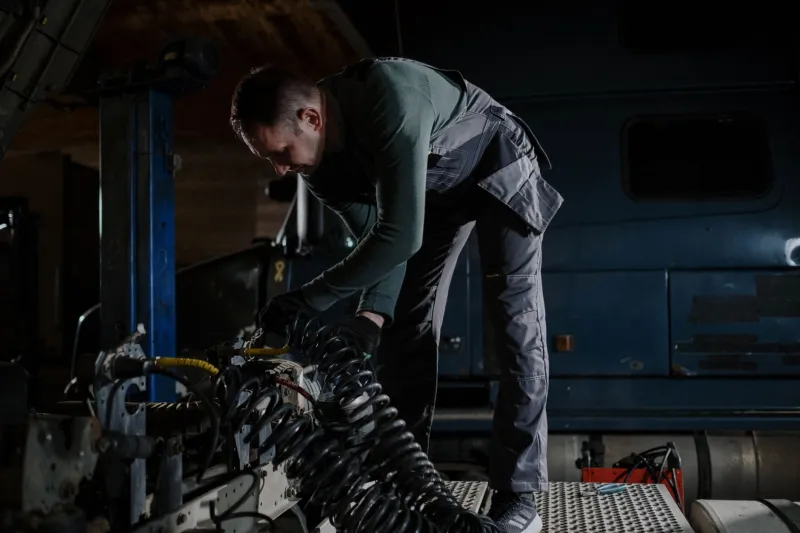
Quiet Until It Isn't: The Drivetrain Wear Your Heavy-Duty Truck Is Hiding From You
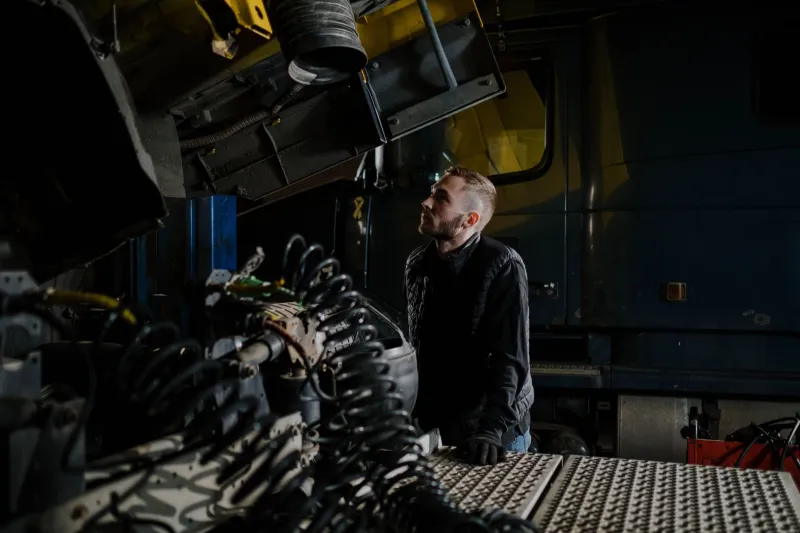
There's a particular kind of mechanical problem that keeps shop technicians busy: the failure that nobody saw coming, even though the warning signs were there the whole time. Drivetrain issues fall into this category more often than almost anything else on a heavy-duty truck.
Brakes squeal. Engines knock. Tires vibrate. But worn u-joints, deteriorating transmission mounts, and fatigued driveshafts tend to operate in the background — subtle, gradual, easy to rationalize away until the moment they're not subtle at all. By the time most drivers notice something is genuinely wrong, the damage has usually been building for thousands of miles.
Understanding how drivetrain wear develops — and what it actually looks and sounds like in the early stages — is one of the most valuable things a truck owner or operator can know.
Why the Drivetrain Gets Overlooked
The drivetrain on a heavy-duty truck is a system built for punishment. It's engineered to handle enormous torque loads, constant vibration, and the stress of hauling tens of thousands of pounds across varied terrain. Because it's built tough, people tend to assume it will announce its own problems loudly when something goes wrong.
That assumption gets trucks stranded.
The components most likely to cause silent, progressive failures — u-joints, driveshaft tubes, transmission mounts, and rear differential internals — all share a common characteristic: they degrade gradually under load, and the symptoms they produce early on are easy to confuse with normal road noise or minor vibrations that feel like they're coming from somewhere else entirely.
U-Joints: Small Parts, Big Consequences
Universal joints are among the most stressed components in the entire drivetrain, and they're often among the least frequently inspected. On a long-haul truck, u-joints flex thousands of times per mile, transferring torque through angles that create cyclical stress on the bearing caps and cross.
Early wear in a u-joint typically shows up as a slight vibration felt through the cab floor or seat, most noticeable during acceleration from a stop or when transitioning from throttle to engine braking. Some drivers describe it as a faint shudder that comes and goes. Others notice a low clunk when shifting into gear.
The inspection is straightforward: with the truck safely supported and the driveline accessible, check for any rotational play in the u-joint by gripping the driveshaft on either side of the joint and attempting to rotate the two sections against each other. Any detectable movement is a problem. Also look for rust streaking from the bearing caps — that's a sign the grease seal has failed and the bearing is running dry.
Don't wait on this one. A u-joint that lets go at highway speed doesn't just leave you stranded — it can put a driveshaft through the floor or into another vehicle.
Driveshaft Wear and Balance
The driveshaft itself can develop problems that have nothing to do with the joints at either end. Tube damage from road debris, improper repairs, or corrosion can throw the shaft out of balance. Slip yoke wear — where the shaft telescopes into the transmission output — creates vibration that changes with vehicle speed and load.
A vibration that intensifies at a specific speed range and lessens above or below that range is a classic indicator of driveshaft balance issues. It's distinct from tire-related vibration, which tends to be more consistent across a broader speed range.
Center support bearings on trucks with two-piece driveshafts are another common failure point. When the rubber carrier deteriorates, the bearing can shift position, creating a harmonic vibration and, eventually, enough misalignment to accelerate wear throughout the rest of the driveline.
Transmission Mounts: The Overlooked Foundation
Transmission mounts don't get much attention until they're completely gone, and by then the damage they've allowed to accumulate elsewhere makes the conversation a lot more expensive.
The mount's job is to isolate the transmission from the chassis, absorbing the torque reaction forces that would otherwise stress every connection point in the driveline. When the rubber deteriorates — and it does, especially in trucks operating in temperature extremes or rough terrain — the transmission shifts under load. That movement puts abnormal stress on the output shaft, the driveshaft, and the u-joints.
Signs of failing transmission mounts include a noticeable "clunk" when engaging a gear from neutral, excessive driveline vibration that seems worse under heavy throttle, and visible movement of the transmission when someone rocks the truck. A physical inspection with the truck safely lifted is the definitive test — look for cracked or collapsed rubber, and check whether the mount is actually making contact with both the transmission and the crossmember.
Rear Differential: What the Noise Is Telling You
The rear differential is built to last, but it's not invincible. Low fluid, contaminated lubricant, and the cumulative stress of heavy hauling all take a toll on ring and pinion gears, carrier bearings, and axle shaft bearings.
A whine that changes pitch with vehicle speed — distinct from a tire hum — often indicates ring and pinion wear. A rumbling noise that shifts when you change lanes (loading one side of the axle more than the other) points toward carrier or axle bearing wear. Either of these sounds deserves immediate attention.
Differential fluid should be inspected regularly, not just changed on a calendar schedule. Metal particles in the fluid — visible as a metallic sheen or gritty texture — are a direct indicator of internal wear that needs to be addressed before it becomes a complete gear failure.
Making Inspections Part of the Routine
None of this requires specialized equipment beyond what any competent heavy-duty shop has on hand. What it does require is the discipline to actually look at these components on a regular basis rather than waiting for symptoms to become undeniable.
Building a drivetrain inspection into every major service interval — checking u-joints for play, examining mounts for deterioration, listening for differential noise during a test drive, and pulling differential fluid for inspection — takes maybe twenty minutes. The cost of missing something that's already developing is measured in tow bills, emergency repairs, and weeks off the road.
Your drivetrain is trying to tell you something. The question is whether you're listening before it has to shout.